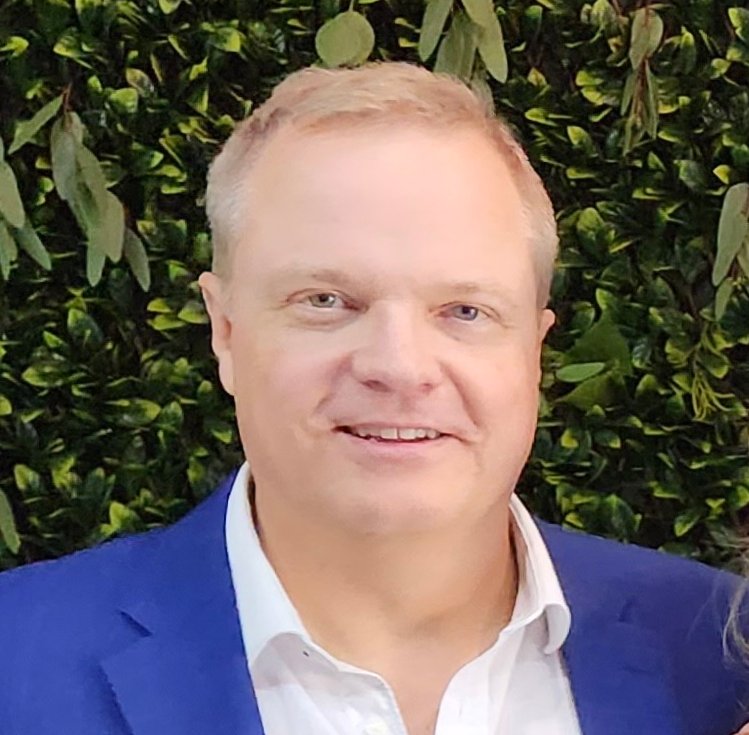
Mike Luloh
Live AI training

Live AI training for teams in medical devices and other FDA-regulated industries.

Picture the senior engineer on your team with twenty years' experience. Right now they're quietly avoiding Copilot because the one time they tried it, the output was wrong. So they went back to doing things the way they always have.

Copilot is crippled in their environment, locked down by IT, with no general access to Claude, ChatGPT, or Gemini. Features most users don't know exist, and nobody taught them how to work effectively with AI in the first place: when to use it, when not to, how to catch the confident-sounding wrong answer before it becomes a problem.

Multiply that by every senior person in your org and you have a pretty good picture of where most of the unrealized value is hiding.

Is this you?

Two ways
to work together.

1:1 Session
For directors and senior engineers.
Build AI fluency or think through your own strategy. Live, one hour, billed by the session. No minimum commitment.
$250
per hour
book a session →
Small-group cohort
For teams or peer groups.
Live, two hours, typically four to eight people. Train your team, or learn alongside peers solving the same problems.
$150
per person
per session
get in touch →

All sessions are live. Nothing is pre-recorded. You ask questions, we work through your actual problems, you leave with something you can use immediately.

Working curriculum.

Sessions are tailored to what your team actually needs. The landscape is moving, so this list is updated continuously.

— I — Practical AI skills +
  • What works today, what's hype, and how to tell the difference, with live side-by-side comparisons
  • AI-assisted technical writing in regulated environments, and where AI can hallucinate dangerously
  • AI for engineering leadership: synthesizing project status, spotting schedule risks, preparing for design reviews
— II — The regulated product lifecycle +
  • Practical AI use in IEC 62304 work: what speeds things up today, and what's still ahead
  • Cut DHF documentation time without losing audit defensibility
  • Faster hazard analysis and FMEA under ISO 14971 — and managing the new risks AI itself introduces
  • Evaluating AI/ML-enabled devices: SaMD classification, FDA guidance, and the strategic moves that follow
— III — Agentic AI for software teams +
For organizations with broader AI access than Copilot alone
  • Using agentic AI to write, review, and refactor production code in regulated codebases
  • AI-generated backlog items: from user stories to acceptance criteria
  • BDD test automation with AI: generating and maintaining behavior-driven test suites
  • Building a complete application by prompting an AI agent, a multi-session, hands-on walkthrough
  • Rethinking the dev team: how agentic AI shifts the balance toward prompt engineering and code review
— IV — Strategic AI leadership +
  • Rolling out secure AI tools to your engineering team without creating a compliance nightmare
  • Surfacing shadow AI: the unsanctioned tool use already happening on your team, and how to turn it into something you can defend
  • AI vendor evaluation: cutting through pitch decks and avoiding a six-month POC that goes nowhere
  • A capability maturity map of what works now, what's emerging, and what's still vaporware
Mike Luloh
— Mike Luloh, Southlake TX
— About

Thirty years building safety-critical medical device software. My work at Alcon includes real-time laser control for LASIK surgical instruments and novel methods for high-speed optical metrology of intraocular lenses.

Voting member of the AAMI committee that writes IEC 62304, the international standard for medical device software.

I've spent the last three years figuring out where AI actually fits in regulated product development, what the real risks are, and how to implement it without creating compliance exposure. That's what I teach.

— Get in touch

Tell me what your team is actually trying to solve.

However works best for you. I'll respond within a day or two.